
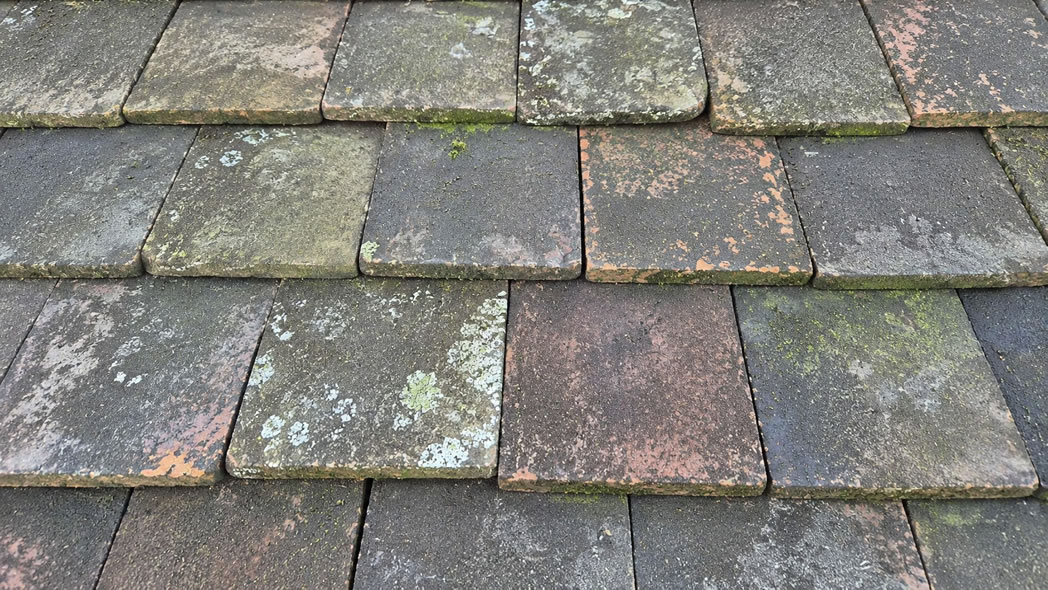
Older slate and tile roofs can remain serviceable for many years when they are inspected and maintained carefully.
Age alone does not mean a roof needs replacing. Natural slate, clay tiles and even older concrete tiles can continue protecting a property long after their expected lifespan where the covering, fixings, battens and roof structure remain sound.
However, old roofs usually need a different approach from modern roofing systems. Materials can become brittle, original fixings may corrode and matching replacements can be difficult to find. Heavy-handed cleaning or unnecessary foot traffic may cause more damage than the original fault.
Regular roof servicing can identify small problems before they develop into leaks, rotten timber or widespread covering failure. The aim should be to preserve as much sound material as possible while repairing vulnerable areas correctly.
This guide explains how to maintain and service an old slate or tiled roof, including inspection schedules, common faults, repair options and typical UK costs.
Old Slate and Tile Roof Maintenance at a Glance
| Maintenance Task | Why It Matters |
|---|---|
| Visual roof inspection | Identifies slipped, cracked or missing materials |
| Loft inspection | Finds leaks, condensation and timber damage |
| Gutter cleaning | Prevents overflow and damp at roof edges |
| Valley clearing | Keeps major drainage routes open |
| Flashing inspection | Helps prevent leaks around chimneys and walls |
| Ridge and hip checks | Finds loose mortar or dry-fix components |
| Verge inspection | Identifies loose edge tiles and failed mortar |
| Moss assessment | Checks whether growth is blocking drainage or lifting tiles |
| Tile or slate replacement | Prevents local faults from spreading |
| Ventilation inspection | Reduces condensation and timber decay |
| Timber checks | Finds rotten battens, rafters and decking |
| Storm inspection | Identifies wind damage promptly |
What Is an Old Roof?
There is no fixed age at which a roof becomes old.
The term may describe:
- A natural slate roof more than 70 years old
- A clay tile roof installed before the middle of the twentieth century
- A concrete tile roof approaching 40 or 50 years old
- A roof with original mortar, battens or underlay
- A roof containing discontinued tiles
- A roof that has received many earlier repairs
- A roof without modern breathable membrane
- A roof fixed using older nails or timber pegs
Some historic slate and clay roofs are more durable than much newer coverings.
Condition matters more than age alone.
How Long Can Old Slate and Tile Roofs Last?
| Roof Covering | Broad Potential Lifespan |
| Natural slate | 75–150 years or more |
| Handmade clay tiles | 60–100 years or more |
| Machine-made clay tiles | 50–100 years |
| Concrete interlocking tiles | 40–60 years or more |
| Concrete plain tiles | 40–70 years |
| Artificial slate | 30–60 years |
These figures only describe the visible covering.
Other roof parts may need attention sooner, including:
- Nails
- Hooks
- Battens
- Roofing felt
- Valleys
- Flashing
- Ridge mortar
- Fascias
- Gutters
- Roof windows
A natural slate roof may need stripping and refixing even when most of the slate remains reusable.
Why Regular Servicing Matters
Older roofs often fail gradually rather than suddenly.
A single slipped slate may expose the roofing underlay. If the fault remains unnoticed, water can damage:
- Battens
- Rafters
- Insulation
- Ceilings
- Plaster
- Electrical fittings
Regular servicing helps identify early warning signs such as:
- Loose fixings
- Small flashing splits
- Cracked tiles
- Blocked valleys
- Failing mortar
- Damp roof timbers
- Bird damage
- Gutter overflow
Early repairs are usually cheaper and less disruptive than emergency work.
Old Roof Servicing vs Roof Replacement
Servicing aims to preserve a roof that remains broadly sound.
Replacement may be more suitable where deterioration is widespread.
| Roof Condition | Servicing and Repair | Replacement |
| One or two slipped slates | Usually suitable | Unnecessary |
| Several cracked tiles | Often suitable | Depends on wider condition |
| Local flashing leak | Usually suitable | Rarely needed |
| Mortar failure in one area | Repairable | Not normally |
| Repeated leaks in different places | Less effective | May be better |
| Widespread nail sickness | Temporary repairs possible | Often needed |
| Rotten battens across roof | Not enough | Usually required |
| Brittle underlay throughout | Limited benefit | Often required |
| Structural sagging | Needs investigation | May form part of solution |
| Many previous patches | May have limited value | Consider replacement |
How Often Should an Old Roof Be Inspected?
A sensible schedule may include:
- Visual checks twice a year
- Inspection after severe storms
- Gutter cleaning once or twice a year
- Professional inspection every two to five years
- Earlier inspection where leaks or movement appear
More frequent checks may be needed for:
- Coastal homes
- Exposed hilltop properties
- Roofs beneath trees
- Listed buildings
- Large slate roofs
- Properties with several chimneys
- Roofs with hidden gutters
- Homes with repeated storm damage
Ground-Level Roof Checks
Homeowners can look for obvious problems without climbing onto the roof.
Check from:
- Garden
- Driveway
- Pavement
- Upper windows
- Neighbouring land with permission
- Binoculars
- Safe drone survey by a suitable operator
Look for:
- Missing tiles or slate
- Uneven roof lines
- Broken ridge tiles
- Gaps at the verge
- Loose lead flashing
- Moss build-up
- Overflowing gutters
- Sagging
- Cracked chimneys
- Debris after storms
Never attempt to inspect a high roof from an unsecured ladder.
Loft Inspections
The loft can reveal roof problems before they become visible in rooms below.
Look for:
- Damp timber
- Water stains
- Daylight through the covering
- Torn underlay
- Wet insulation
- Mould
- Condensation droplets
- Rusted nails
- Rotten battens
- Insect damage
- Sagging rafters
- Musty smells
Use a torch and avoid stepping between joists.
Old roofs may not have modern underlay, so small areas of daylight do not always prove a leak. A roofer should assess the complete roof construction.
Common Problems on Old Slate Roofs
| Slate Roof Problem | Likely Cause |
| Slipped slate | Corroded nail or enlarged fixing hole |
| Cracked slate | Foot traffic, frost or impact |
| Missing slate | Wind damage or fixing failure |
| Nail sickness | Widespread corrosion of old fixings |
| Delaminating slate | Poor slate quality or long-term weathering |
| Uneven courses | Earlier repairs or movement |
| Rusted hooks | Unsuitable repair materials |
| Broken eaves slate | Weak support or impact |
| Leaking valley | Failed lining or poor cuts |
| Loose ridge tile | Failed mortar or fixings |
Nail Sickness
Nail sickness occurs when the nails holding old slate corrode.
The slate may still be sound, but the fixing no longer supports it.
Signs include:
- Slates slipping in different areas
- Regular repairs after storms
- Rust staining
- Open gaps
- Slates resting in gutters
- Old iron nails visible in the loft
One slipped slate does not prove widespread nail sickness.
However, repeated slippage across several roof slopes often means that local repairs will become increasingly frequent.
Repairing Slipped Slate
A slipped slate may be repaired using:
- New nails where the area can be opened
- Copper or stainless-steel hooks
- Suitable slate straps
- Refixing after lifting surrounding slates
- Replacement slate where the original is cracked
Visible metal tingles are sometimes used for small repairs, but excessive use can make the roof look untidy and may indicate widespread fixing failure.
Common Problems on Old Tiled Roofs
| Tile Roof Problem | Likely Cause |
| Cracked tile | Frost, impact or foot traffic |
| Slipped tile | Failed nib, nail or clip |
| Flaking surface | Weathering or frost damage |
| Loose ridge tile | Failed mortar |
| Cracked verge mortar | Movement and exposure |
| Moss build-up | Shade and moisture |
| Broken valley tile | Poor cutting or impact |
| Rotten battens | Long-term leaks |
| Discontinued tile | Age of roof system |
| Faded concrete | Normal surface weathering |
Concrete Tile Weathering
Older concrete tiles often lose surface colour.
They may appear:
- Faded
- Patchy
- Rough
- Moss-stained
- Lighter on exposed slopes
Colour loss alone does not mean the tile has failed.
Replacement may only be needed where tiles are:
- Cracked
- Porous
- Frost damaged
- Delaminating
- Distorted
- Breaking during access
Clay Tile Weathering
Clay tiles can remain durable for many decades.
However, old clay may suffer:
- Frost cracks
- Surface flaking
- Broken nibs
- Warping
- Spalling
- Impact damage
- Loose mortar
Handmade clay tiles naturally vary in colour and shape, so small differences do not always indicate damage.
Ridge and Hip Maintenance
Older roofs often rely on mortar to secure ridge and hip tiles.
Common problems include:
- Cracked mortar
- Loose tiles
- Missing pointing
- Water entering joints
- Ridge tiles moving in wind
- Mortar falling into gutters
Minor stable cracks may accept local repair.
Where ridge tiles move, the roofer may need to:
- Lift the affected tiles.
- Remove failed mortar.
- Check the roof covering beneath.
- Re-bed and mechanically secure them.
- Replace broken units.
- Finish the mortar or dry-fix system.
Surface pointing over loose bedding is unlikely to last.
Dry Ridge Conversion
A dry ridge system uses mechanical fixings rather than mortar as the main support.
It may be suitable during:
- Full re-roofing
- Complete ridge renewal
- Repeated mortar failure
- Storm-related repairs
Potential benefits include:
- Mechanical security
- Lower mortar maintenance
- Ventilation in some systems
- Easier component replacement
However, the appearance may differ from a traditional mortar ridge.
Heritage and planning considerations may apply.
Verge Maintenance
The verge is the roof edge above the gable wall.
Older mortar verges may develop:
- Cracks
- Loose sections
- Missing mortar
- Broken edge tiles
- Damaged undercloak
- Exposed battens
- Bird entry
Small local repairs may be possible.
Where mortar fails along the full verge, options include:
- Rebuilding the mortar verge
- Installing a compatible dry verge
- Replacing damaged edge tiles
- Repairing undercloak and timber
Old cement undercloak may contain asbestos and should be assessed before disturbance.
Valley Maintenance
Valleys carry large amounts of rainwater.
They may be lined with:
- Lead
- GRP
- Zinc
- Concrete valley troughs
- Tile valleys
- Other metal systems
Old valleys may fail because of:
- Blocked debris
- Split lead
- Corrosion
- Poor overlaps
- Cracked troughs
- Broken cut tiles
- Rotten valley boards
- Previous sealant patches
Valleys should be kept clear of moss, leaves and broken mortar.
Chimney and Flashing Maintenance
Chimneys create several vulnerable roof junctions.
Check:
- Step flashing
- Back gutters
- Front aprons
- Mortar joints
- Chimney pointing
- Pots and cowls
- Flaunching
- Lead splits
- Loose wedges
Lead needs room to expand and contract.
Large sheets, short overlaps and excessive fixing can cause splitting.
Sealant should not be used as a routine substitute for correctly installed flashing.
Gutter Maintenance
Gutters protect the roof edge and walls.
Blocked or damaged gutters can cause:
- Water behind fascias
- Rot at rafter ends
- Damp gable walls
- Overflow onto lower roofs
- Saturated masonry
- Damage to soffits
Clean gutters and downpipes once or twice a year, particularly where trees overhang the property.
Also check:
- Bracket spacing
- Joints
- Outlet blockages
- Cracks
- Falls
- Downpipe connections
Hidden and Box Gutters
Older properties may contain hidden gutters behind parapets or between roof slopes.
These need particular attention because leaks can remain concealed.
Common faults include:
- Blocked outlets
- Split lead
- Corrosion
- Poor falls
- Open joints
- Debris
- Undersized drainage
- Rotten boards
Hidden gutters should be included in regular roof servicing.
Moss on Old Roofs
Moss is common on shaded and north-facing roofs.
It may:
- Hold moisture
- Block gutters
- Collect in valleys
- Lift lightweight materials
- Hide cracks
- Add weight when wet
- Fall onto paths
However, moss does not automatically mean the roof covering is defective.
The condition beneath the moss matters more than the appearance.
Should Moss Be Removed?
Removal may be worthwhile where moss:
- Blocks drainage
- Falls into gutters
- Covers inspection areas
- Lifts tiles
- Holds debris around roof windows
- Creates safety concerns below
The method should be gentle and appropriate for the roof.
Avoid aggressive pressure washing on old slate and tiles.
Why Pressure Washing Can Damage an Old Roof
High-pressure water can:
- Crack fragile slate
- Break tile surfaces
- Force water beneath the covering
- Remove protective surface layers
- Damage mortar
- loosen fixings
- Expose underlay
- Flood the loft
Manual removal or controlled low-pressure methods are usually safer.
Roof Coatings and Paint
Roof coatings are sometimes sold as a way to restore old tiles.
Potential concerns include:
- Trapping moisture
- Covering cracks
- Uneven adhesion
- Changing drainage
- Making future matching harder
- Hiding deterioration
- Overspray
- Short coating lifespan
A coating does not repair rotten battens, failed underlay or loose tiles.
The roof should be structurally and weatherproof before any cosmetic treatment is considered.
Old Roofing Underlay
Older roofs may contain:
- Bituminous felt
- Reinforced felt
- No underlay
- Timber sarking boards
- Traditional lime-backed construction
- Modern membrane added during repairs
Underlay can become:
- Brittle
- Torn
- Sagging
- Detached
- Damaged by leaks
- Short of the gutter
- Perforated around fixings
Local underlay repairs are possible where damage is limited.
Widespread failure normally requires tiles or slate to be removed.
Can Underlay Be Repaired from Inside?
Internal patches may reduce draughts or catch minor drips temporarily.
However, a durable repair usually needs to be formed from above so that the new membrane overlaps correctly and directs water towards the eaves.
An internal patch should not be treated as a substitute for proper roof repair.
Roof Batten Maintenance
Battens support slate and tiles.
Old battens may become:
- Rotten
- Split
- Insect damaged
- Too thin
- Weak around nails
- Saturated by leaks
A local batten repair may be possible when only one short area is affected.
Widespread failure usually means stripping the roof covering.
Rafter and Timber Checks
Long-term leaks can affect:
- Rafters
- Purlins
- Wall plates
- Trusses
- Valley boards
- Bargeboards
- Fascias
- Roof decking
Warning signs include:
- Soft timber
- Sagging
- Dark staining
- Mould
- Split joints
- Movement
- Crumbling wood
- Loose fixings
Structural timber repairs should be planned before the roof is recovered.
Ventilation and Condensation
Not every damp roof problem is a leak.
Older homes may develop condensation after:
- Loft insulation is increased
- Draughts are sealed
- Bathrooms vent into the loft
- Roof ventilation becomes blocked
- Warm air enters through ceiling gaps
- Insulation is pushed into the eaves
Signs of condensation include:
- Moisture on nail heads
- Mould across several timbers
- Damp worse in winter
- Water droplets beneath underlay
- No clear connection with rainfall
A roof service should distinguish condensation from external water entry.
Roof Ventilation Checks
Inspect:
- Eaves vents
- Ridge ventilation
- Tile vents
- Slate vents
- Air paths above insulation
- Extractor ducting
- Loft hatches
- Gaps around pipes and cables
Adding random roof vents without understanding the roof design may not solve the problem.
Old Roofs and Loft Insulation
Improving insulation can reduce heat loss, but the work must preserve ventilation.
Avoid:
- Blocking eaves
- Compressing insulation
- Leaving gaps at dormers
- Covering electrical equipment unsafely
- Allowing warm air to leak into the loft
- Trapping damp timber
A major roof service or re-roof creates an opportunity to assess insulation properly.
Roof Windows and Skylights
Older roof windows can develop:
- Failed seals
- Misted glazing
- Rotten timber
- Loose flashing
- Blocked drainage channels
- Draughts
- Condensation
- Damaged surrounding tiles or slate
A leak near a window may come from the flashing or roof above rather than the window itself.
Servicing may include:
- Cleaning channels
- Replacing seals
- Inspecting flashing
- Repairing surrounding underlay
- Replacing damaged roof covering
- Lubricating mechanisms where appropriate
Storm Damage Checks
Inspect an older roof after:
- Strong winds
- Hail
- Heavy snow
- Falling branches
- Prolonged rain
- Freeze-thaw periods
Look for:
- Missing slate
- Lifted tiles
- Loose ridge units
- Damaged verge
- Split flashing
- Fallen mortar
- Blocked gutters
- Debris on lower roofs
Older materials may be more vulnerable to impact and movement.
Tree-Related Roof Maintenance
Overhanging trees can cause:
- Moss
- Leaf blockages
- Falling branches
- Scratched surfaces
- Damaged gutters
- Shaded damp conditions
- Animal access
Prune branches where appropriate and keep drainage clear.
Tree work should be completed by a suitable professional where large branches are involved.
Birds, Wasps and Other Pests
Old roof gaps may allow access for:
- Birds
- Wasps
- Bees
- Squirrels
- Insects
Signs include:
- Nesting material
- Droppings
- Noise
- Damaged underlay
- Gaps at eaves and verges
Repairs should not block required ventilation.
Active bird nests may have legal protection, so timing and method matter.
Small Repair or Wider Service?
| Fault | Small Repair May Be Enough | Wider Service Recommended |
| One slipped slate | Yes | If others are moving |
| One cracked tile | Yes | If tiles are brittle |
| One blocked gutter | Yes | If overflow has caused rot |
| Small flashing split | Possibly | If lead is failing elsewhere |
| Local ridge crack | Yes | If ridge tiles remain firm |
| Repeated slipped slate | Less likely | Yes |
| Moss in valley | Clear and inspect | Yes |
| Damp loft timber | Investigate | Yes |
| Torn underlay | Local repair possible | If widespread, inspect full slope |
| One loose verge tile | Repair | Check complete verge |
Typical Old Roof Servicing Costs in the UK
The following figures provide broad budgeting ranges.
| Service or Repair | Typical UK Cost |
| Basic visual roof inspection | £100–£250 |
| Drone roof survey | £150–£400 |
| Detailed roof condition report | £250–£700 |
| Gutter cleaning | £80–£250 |
| Valley and gutter clearance | £150–£400 |
| Replace one or two tiles | £150–£450 |
| Replace several slates | £250–£800 |
| Small flashing repair | £300–£900 |
| Ridge or hip repair | £300–£1,200 |
| Verge mortar repair | £300–£900 |
| Local underlay repair | £350–£1,000 |
| Small timber repair | £500–£2,000 |
| Moss removal | £600–£2,000 |
| Larger roof service | £800–£3,000 |
| Partial roof slope repair | £2,000–£7,000 |
| Scaffolding | £500–£2,500 or more |
The exact cost depends heavily on safe access.
What Is Included in a Roof Service?
A proper service may include:
- Ground-level inspection.
- Roof-level inspection.
- Loft inspection.
- Checking tiles or slate.
- Checking ridges and hips.
- Inspecting verges.
- Clearing gutters.
- Clearing valleys.
- Checking flashing.
- Inspecting chimneys.
- Checking roof windows.
- Reviewing ventilation.
- Photographing defects.
- Completing small agreed repairs.
- Providing recommendations.
Not every service includes repairs, so the quotation should state what is covered.
Roof Service vs Roof Survey
Roof service
A service may include maintenance and small repairs.
Roof survey
A survey focuses on condition, diagnosis and recommendations.
A detailed survey may be more suitable before:
- Buying a property
- Major renovation
- Solar installation
- Loft conversion
- Full roof replacement
- Insurance claim
- Repair dispute
Annual Roof Maintenance Plans
Some contractors offer annual or periodic maintenance.
This may include:
- Scheduled inspection
- Gutter clearance
- Minor tile replacement
- Photographs
- Priority call-outs
- Written reports
- Discounted repairs
Check whether unused visits or repairs carry over and what materials are included.
An annual plan may be useful for large, complex or heavily exposed roofs.
When Roof Servicing Offers Good Value
Servicing is often worthwhile where:
- The covering is broadly sound
- Faults are local
- Matching materials remain available
- The structure is stable
- The homeowner wants to extend roof life
- The property is difficult to access
- Preventive maintenance can reduce repeat scaffolding
- The roof contains valuable reusable slate
When Servicing May Not Be Enough
A full replacement deserves consideration where:
- Leaks appear in several areas
- Slate fixings fail throughout
- Tiles are breaking widely
- Underlay is brittle across the roof
- Battens are rotten
- Roof slopes sag
- Valleys and flashing are failing together
- Repairs are needed every few months
- The roof is being stripped for other major work
A contractor should explain whether servicing is expected to provide a short-term or long-term result.
Preserving Old Slate
Old natural slate can be valuable.
During servicing:
- Avoid unnecessary walking
- Use suitable roof ladders
- Replace fixings carefully
- Use matching slate
- Retain sound removed pieces
- Avoid harsh cleaning
- Keep spare slate
- Repair leadwork before leaks spread
Do not discard old slate without agreeing who owns it.
Preserving Old Clay Tiles
Clay tiles can also be valuable, particularly where they are handmade or discontinued.
Good practice includes:
- Careful lifting
- Sorting by condition
- Reusing sound units
- Keeping spare pieces
- Avoiding aggressive pressure washing
- Repairing mortar carefully
- Matching size and camber
Keeping Spare Materials
Keep a small supply of:
- Field tiles
- Ridge tiles
- Verge units
- Natural slate
- Plain tiles
- Decorative units
Label them with:
- Roof slope
- Manufacturer
- Product code
- Dimensions
- Colour
- Date stored
Store materials safely and avoid overloading loft boarding.
Working on Fragile Old Roofs
Old roofs can be damaged by:
- Solar installers
- Aerial installers
- Chimney contractors
- Gutter cleaners
- Window installers
- Pest-control workers
- Homeowners
Any contractor accessing the roof should understand the covering.
Slate in particular needs careful weight distribution.
Old Roof Maintenance Mistakes
Waiting for a Leak
Visible leaks often appear after hidden damage has started.
Pressure Washing
High pressure can crack and dislodge old coverings.
Covering Everything with Sealant
Sealant does not repair rotten timber or failed flashing.
Ignoring Loose Mortar
Falling mortar can create safety risks and expose roof edges.
Replacing Slate with the Wrong Thickness
Poorly matched slate may sit unevenly.
Walking Directly on the Roof
Foot traffic causes avoidable breakage.
Blocking Ventilation
This can create condensation and timber decay.
Coating a Failing Roof
Cosmetic coatings do not fix structural or waterproofing faults.
Using Incompatible Replacement Tiles
Similar-looking tiles may not interlock correctly.
Throwing Away Reusable Materials
Original slate and clay tiles may be difficult to replace.
What Should a Maintenance Quote Include?
| Quote Item | Why It Matters |
| Inspection areas | Defines what will be checked |
| Roof access method | Important for safety and cost |
| Number of small repairs included | Prevents confusion |
| Tile or slate allowance | Clarifies materials |
| Gutter and valley clearance | Important for drainage |
| Flashing inspection | Common source of leaks |
| Ridge and verge work | May be separate |
| Loft inspection | Helps find hidden damage |
| Photographs | Provides evidence |
| Waste removal | Covers moss, mortar and broken units |
| Extra work procedure | Controls additional costs |
| VAT | Confirms final price |
| Guarantee | Explains cover for repairs |
| Written report | Useful for future planning |
Questions to Ask a Roofer
- Is the roof covering still serviceable?
- Are the slates or tiles reusable?
- Are the fixings failing?
- Is the underlay still sound?
- Are the battens or rafters damaged?
- Is the problem a leak or condensation?
- Can small repairs extend the roof’s life?
- Are matching materials available?
- Does moss need removing?
- Will the cleaning method damage the roof?
- Are valleys and gutters clear?
- Is the chimney flashing sound?
- Does the work require scaffolding?
- Will I receive photographs?
- Which repairs are included?
- What might need replacing later?
- How often should the roof be inspected?
- What guarantee applies?
Old Roof Maintenance Checklist
| Task | Complete? |
| Check roof from ground level | |
| Inspect after storms | |
| Clear gutters | |
| Clear valleys | |
| Check slipped slate or tiles | |
| Inspect ridge and hip tiles | |
| Check verge mortar or dry verge | |
| Inspect chimney flashing | |
| Check roof windows | |
| Look for loft damp | |
| Check ventilation | |
| Inspect insulation at eaves | |
| Check fascias and soffits | |
| Monitor moss growth | |
| Keep spare materials | |
| Arrange periodic professional inspection |
Frequently Asked Questions
How often should an old slate or tiled roof be inspected?
A ground-level check twice a year and after severe storms is sensible. A professional inspection every two to five years may also be useful.
Does an old roof always need replacing?
No. Many old roofs remain serviceable where the covering, fixings, battens and structure are in good condition.
How do I maintain an old slate roof?
Replace slipped or cracked slate, check fixings, clear valleys and gutters, maintain flashing and avoid unnecessary foot traffic.
How do I maintain an old tiled roof?
Replace broken tiles, inspect ridge and verge mortar, clear drainage, monitor moss and check the underlay and battens after leaks.
What is nail sickness?
Nail sickness occurs when old slate fixings corrode, causing slates to slip from different areas of the roof.
Should moss be removed from an old roof?
Moss should be removed where it blocks gutters, valleys or drainage. Aggressive pressure washing should be avoided.
Can an old roof be pressure washed?
Pressure washing can damage slate, tiles, mortar and underlay. Gentler methods are normally safer.
Can old slate be reused?
Yes. Sound natural slate can often be reused during local repairs or a complete strip-and-refix project.
Can old clay tiles be reused?
Sound clay tiles can often be reused, especially where matching replacements are difficult to source.
How much does old roof servicing cost?
A basic inspection may cost around £100 to £250. A larger service with repairs can cost £800 to £3,000 or more.
Should gutters be cleaned during a roof service?
Yes. Blocked gutters and valleys can cause water to reach fascias, walls and roof timbers.
Can underlay be repaired locally?
Small tears can often be repaired by lifting the covering. Widespread brittle underlay usually needs larger replacement work.
How do I know if an old roof is beyond repair?
Repeated leaks, widespread fixing failure, rotten battens, brittle underlay and structural sagging can indicate that replacement is needed.
Is condensation common in old roofs?
Yes. Condensation can occur where insulation, ventilation and airtightness are poorly balanced.
Is annual roof servicing worthwhile?
It can be worthwhile for complex, exposed or valuable roofs, although many ordinary homes only need periodic inspection and maintenance.